
This one is deeply personal for me.
You’re standing in the doorway of your child’s bedroom, and it looks like a tornado of their entire life. There are boxes piled high with books and bedding, donation bags overflowing with t-shirts you remember buying them in middle school, and photos scattered across the desk that feel like they were taken just yesterday.

You are surrounded by 18 years of memories, all being packed into a car for a drive to a new life. And your heart feels like it’s going to beat right out of your chest.
It’s a dizzying mix of emotions: immense, bursting-at-the-seams pride for the incredible young adult they’ve become, and a deep, heavy lump in your throat that you can’t quite swallow. This is the moment you’ve been working towards since you first held them in your arms.
And it’s okay for it to be both joyful and breathtakingly sad.
The Big Reframe: It’s a “Launch,” Not a Loss
For years, we’ve called this transition the “empty nest.” That phrase alone sounds like a loss, a void, a quiet, dusty space that was once full of life.
Let’s reframe that. This is not an empty nest. This is a launch.
A launch is a success. It’s the triumphant culmination of nearly two decades of your love, guidance, and hard work. It is the moment you get to watch the person you raised spread their wings and take flight. Our goal is not to “survive” this moment, but to lead our family through it with confidence, connection, and grace.
This is your roadmap.
Phase 1: Before They Go (The Final Weeks at Home)
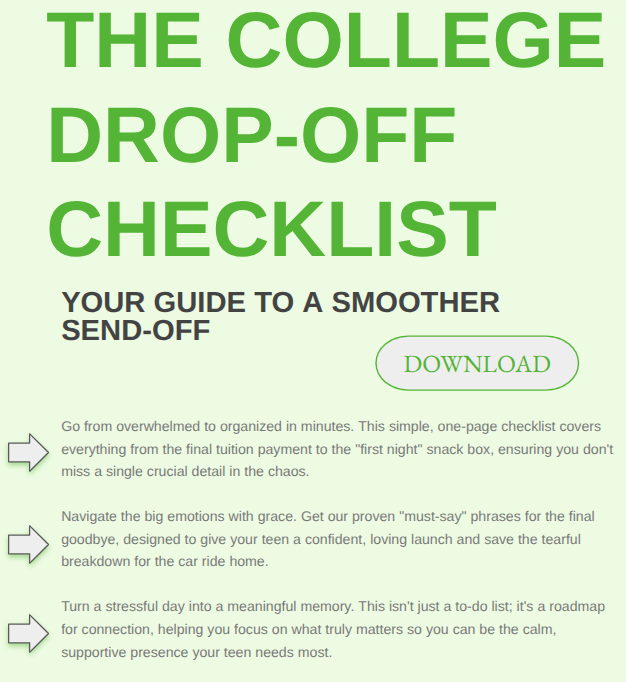
The last few weeks before college can be a minefield of tension. Everyone is a little on edge, a little stressed, and a little sad. Here’s how to navigate it.
Focus on Connection, Not Correction Your first instinct might be to pepper them with reminders: “Did you pack your rain jacket?” “Do you know how to do laundry on the cold cycle?” Resist this urge. The lectures are over. This precious final stretch is for creating positive, lasting memories. Prioritize connection over last-minute correction.
- Try this: Let them choose their favorite restaurant for one last family dinner. Watch the movie you all used to love when they were little. Just sit with them on the couch while they scroll on their phone. Your quiet presence is more valuable than your frantic advice.
Have the “Big 3” Conversations (Calmly) There are a few final, important topics to cover. The key is to have these conversations in calm, low-stakes moments (a drive in the car is perfect) rather than as a dramatic lecture.
- Personal Safety: Talk about making smart choices, looking out for friends, and trusting their gut.
- Managing Money: Review their budget and their new student bank account. Reassure them that it’s okay to make small mistakes as they learn.
- Our Communication Plan: This is crucial. Set a realistic expectation. “Let’s plan to check in with a call once a week, maybe on Sunday afternoons, but you can text or call me anytime you need to.”
The Letter: Your Final Gift This is a powerful, actionable tip. Before they leave, write them a heartfelt letter. Don’t give it to them in the chaos of drop-off day. Tuck it into their suitcase or laptop bag with a note on the front: “Open this after we leave.”
Fill it with your pride, your love, and your unwavering confidence in their ability to handle whatever comes next. It’s a tangible piece of your love they can read and re-read on the hard days.
Phase 2: During the Drop-Off (The Big Day)
This day is a marathon of logistics and emotions. Your goal is to be a calm, steady presence.
Be a Helper, Not a Hoverer Your job on drop-off day is to be useful. Focus on the tasks at hand: make the bed, help them unpack their clothes, go on that final run to Target for forgotten essentials. Meeting the roommate and their family with a warm smile is part of the job, too. Focusing on these simple tasks is a great way to channel your nervous energy and manage your overwhelming emotions.
Plan Your Exit A long, drawn-out, tearful goodbye in a cramped dorm room puts immense emotional pressure on your teen, who is already trying to hold it together in front of their new roommate. Talk about the goodbye ahead of time.
- Try This: Once the room is set up, say your final loving words. “Okay, we are so proud of you. We’re going to head out now so you can start to settle in. We love you more than words can say.” Give them a big, confident hug and a kiss, and then… leave.
It’s Okay to Cry (In the Car) The place for your big emotional release is in the car on the way home, not in the dorm hallway. Giving your teen the gift of a confident, non-anxious departure is one of the most supportive things you can do. Let them see your pride, not your fear. Then, once you’re out of sight, let the tears flow. It’s a necessary and healthy part of the process.
Phase 3: After They’ve Left (The First Month)
The quiet at home will feel strange and maybe even deafening at first.
Let Them Drive the Communication Remember that communication plan you made? Honor it. Resist the urge to text them every morning to see if they’re okay. Let them be the one to initiate most of the calls and texts. This space allows them to build their independence and shows them that you trust them. When they do call, your primary job is to listen, not to solve.
Fill Your Own Nest This transition isn’t just about them; it’s about you, too. The rhythm of your home has fundamentally changed. Now is the time to pour some energy back into yourself.
- Reconnect with your partner. Go on a date night.
- Pick up a hobby or a project you set aside years ago.
- Plan a get-together with friends, especially those who are going through the same transition.
Navigate the First Visit Home Be prepared for that first weekend visit. They will be different—more tired, more independent, and possibly overwhelmed. And yes, they will probably bring home a massive bag of laundry. Manage your expectations. The goal is connection, not a perfect family weekend.
The Teen Take: What Your Teen Might Be Thinking
“I’m just as scared as they are, but I need them to be my rock right now. I know this is hard for them, but when they look anxious and sad, it makes me feel guilty for leaving and even more nervous about what’s ahead. When they look confident in me, it makes me feel like I can actually do this. I don’t need them to be perfect; I just need them to believe in me.”
A New Chapter, Not a Final Page
This transition is the ultimate testament to your successful parenting. The goal was never to keep them at home forever, but to prepare them to build a life of their own.
Your role has now officially shifted from a daily Manager to a trusted Consultant. It’s a new and exciting chapter for your entire family, one that will be filled with a different, more adult kind of connection.
You’ve prepared them for this. You’ve got this.
Are you a parent of a new college student? What’s one piece of advice you’d give to another parent? Share in the comments below.